Grand Canyon National Park
Grand Canyon National Park
Practical guide to Grand Canyon National Park in Arizona: South and North Rims, geology, hiking, access and visitor advice.
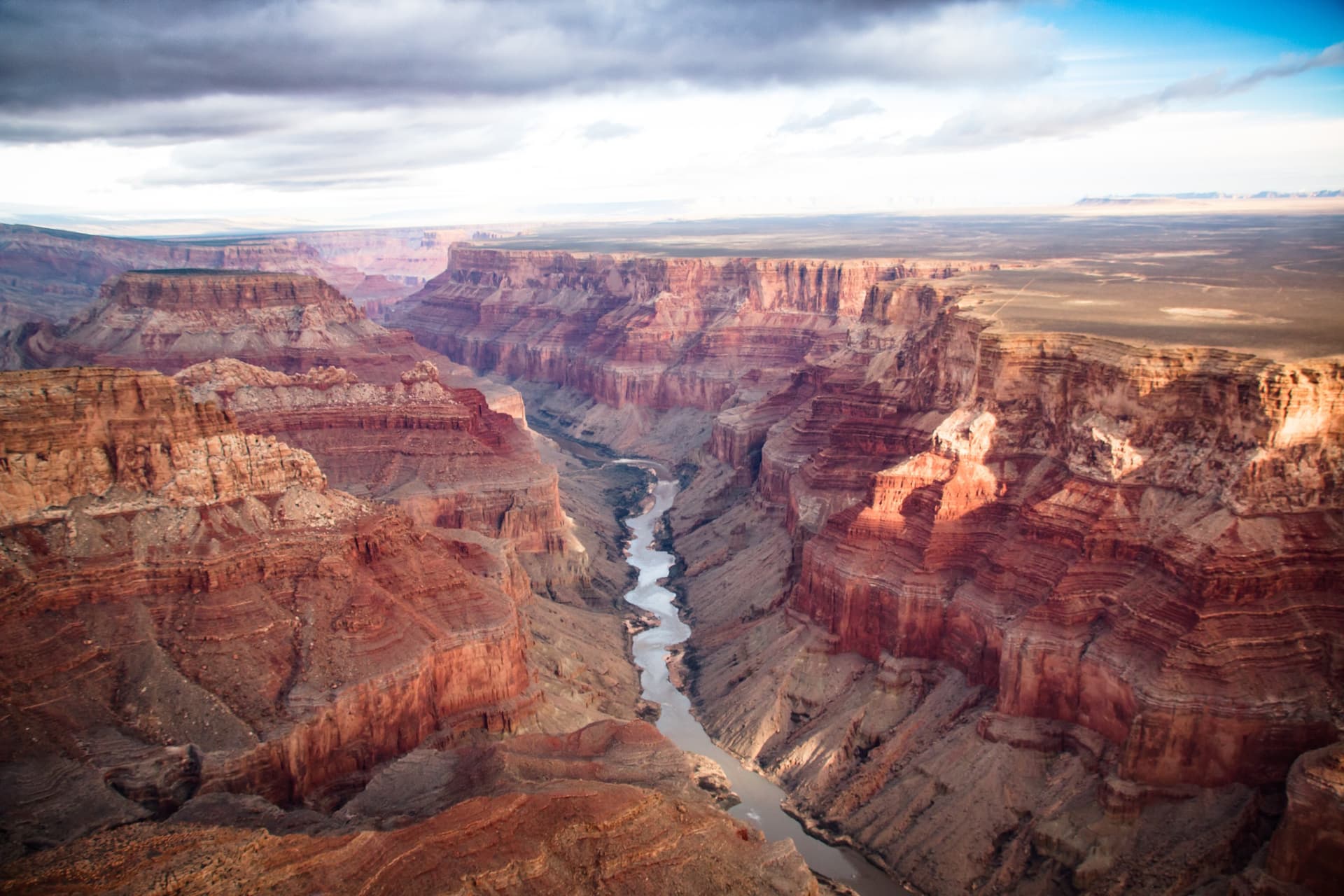
Grand Canyon National Park in Arizona is one of the most studied geological sites in the world. The gorge stretches approximately 445 km long, reaches depths exceeding 1,800 m at its most dramatic points, and offers a readable cross-section of nearly two billion years of Earth's history. A UNESCO World Heritage site since 1979, it is managed by the National Park Service.
Why Visit the Grand Canyon
Beyond the sheer scale of the landscape, the park brings together several complementary interests. The rock layers visible on the walls tell the geological story of North America: the oldest rock formations at the bottom date back approximately two billion years, and it is the Colorado River that has sculpted the landscape over millions of years. Biodiversity is dense for a semi-arid environment: over 350 bird species, 89 mammal species, 47 reptile species, 17 fish species, and approximately 1,500 plant species are recorded here. Finally, the park lends itself equally well to a brief visit from a viewpoint or to multi-day hikes within the canyon.
History of the Site
Human history in the region extends back more than 12,000 years, with an ancient Native American presence evidenced by legends, archaeological sites, and tribes still living in the area today (Havasupai, Hualapai, Navajo, Hopi notably). The first Europeans to reach the canyon were Spanish conquistadors who arrived in the 16th century. American explorers, missionaries, and gold seekers followed from the 19th century onwards, along with the first tourists with the development of the railroad.
The site's protection owes much to Theodore Roosevelt, who visited the canyon in 1903 and created the Grand Canyon Game Preserve in 1906. The site was declared a national monument in 1908, and Woodrow Wilson signed the law establishing the National Park in 1919. UNESCO World Heritage status followed in 1979.
What to See and Do
The South Rim
This is the most visited and most accessible area: open year-round and equipped with accommodations, restaurants, and free shuttle services. Paved viewpoints allow for comfortable visits, even for families. Two stops usefully complement the experience: Yavapai Point and Geology Museum and the Trail of Time, an interpretive path that illustrates geological eras along the rim. The Grand Canyon Railway connects Williams to the South Rim, an alternative to driving.
The North Rim
The North Rim is higher in elevation, more heavily forested, and significantly less crowded. It is accessible from May to October only, and closed in winter due to snow. If you seek quiet viewpoints and a forest-like atmosphere, this is the most rewarding option.
Grand Canyon West
Managed by the Hualapai Nation, outside the national park, Grand Canyon West is known for its Skywalk, a glass bridge jutting out over approximately 4,000 feet (1,200 m) above the canyon floor. The area works well for a short visit from Las Vegas.
Descending into the Canyon
Several trails descend toward the Colorado River, including the Bright Angel Trail and the South Kaibab Trail. The descent is gradual, but the climb out requires sustained effort and proper preparation (water, intense summer heat at the bottom). Reaching the Colorado and returning the same day is not recommended: most hikers plan an overnight stay at Phantom Ranch or camping, by reservation.
Additional Activities
Rafting on the Colorado, from half-day trips to multi-week expeditions, remains the signature activity at the canyon floor. Helicopter tours, cycling on trails open to bicycles, and mule rides are among other options offered by park concessioners.
When to Visit
Summer (June to August) brings peak crowds and intense heat at the canyon floor, while the rims remain manageable due to elevation. Spring (March-May) and autumn (September-November) offer the best conditions: mild temperatures, lighter crowds, easier accommodation availability. Winter is quiet and photogenic on the South Rim, but the North Rim is closed.
How to Get There
By Car
For the South Rim, the most direct route is Highway 180 from Flagstaff followed by Highway 64, passing through the Kaibab Forest. For the North Rim, you reach Jacob Lake then follow Highway 67 southward (May to October only).
By Train
The Grand Canyon Railway provides regular service between Williams and the South Rim, a convenient option to avoid often-congested parking during peak season.
By Shuttle and Bus
Long-distance buses and shuttle services serve the park from major Arizona cities. On-site, free shuttle services on the South Rim allow you to travel between viewpoints without a car.
Practical Information
- Duration of Visit: a half-day for an overview from a few viewpoints, one to two full days to combine rim views with a short descent, or several days for a deep-canyon hike.
- Admission: paid entry per vehicle or per person, valid for several days. The annual America the Beautiful pass may be worthwhile for a road trip visiting multiple parks.
- Gear: hiking boots, hat, sunscreen, and especially ample water supplies in summer. Temperatures at the canyon floor can far exceed those at the rim.
- Reservations: lodging within the park and Phantom Ranch should be reserved several months in advance.
Nearby Attractions
The Grand Canyon fits naturally into a route through western United States national parks. Just hours away, Bryce Canyon National Park offers a very different landscape with its hoodoo forests. Further east on Route 66, the Cadillac Ranch marks an iconic stop on the classic road trip. For an underground experience, the Cave of the Winds in Colorado complements the geological dimension of your journey well.
Frequently Asked Questions
Frequently asked questions
The South Rim is open year-round, better serviced, and more developed: it's the default choice for a first visit. The North Rim, higher and more forested, is less crowded but accessible only from May to October.
A half-day is sufficient for a first look at the major viewpoints. Plan a full day to combine panoramic views with a short descent, and two to three days minimum if you want to hike deeper or reach the Colorado.
Yes, especially during peak summer season and for lodging within the park—several months ahead. Phantom Ranch and camping permits in the canyon are also in high demand.
The park service advises against descending to the river and returning in one day due to elevation change and heat. An overnight stay at Phantom Ranch or camping is the standard practice.
No. The glass bridge is located at Grand Canyon West, managed by the Hualapai Nation, west of the national park. Access and ticketing are separate.
Planning Your Trip
The Grand Canyon is one of the cornerstones of itineraries through the American West. To combine it with other parks and cities, explore our trips to the United States and build a loop suited to your time and pace.
Interested in this visit?
We can include it in your personalised itinerary.