Antelope Canyon
Antelope Canyon
A slot canyon located east of Page, Arizona, Antelope Canyon is explored with a Navajo guide through its two distinct sections, Upper and Lower.
Antelope Canyon is a slot canyon located east of Page, Arizona. Carved into Navajo sandstone by repeated flash floods that surge through the rock, this site lies on Navajo Nation territory and can only be visited with an authorized guide. It comprises two distinct sections, several kilometers apart: Upper Antelope Canyon and Lower Antelope Canyon.
Why Visit Antelope Canyon
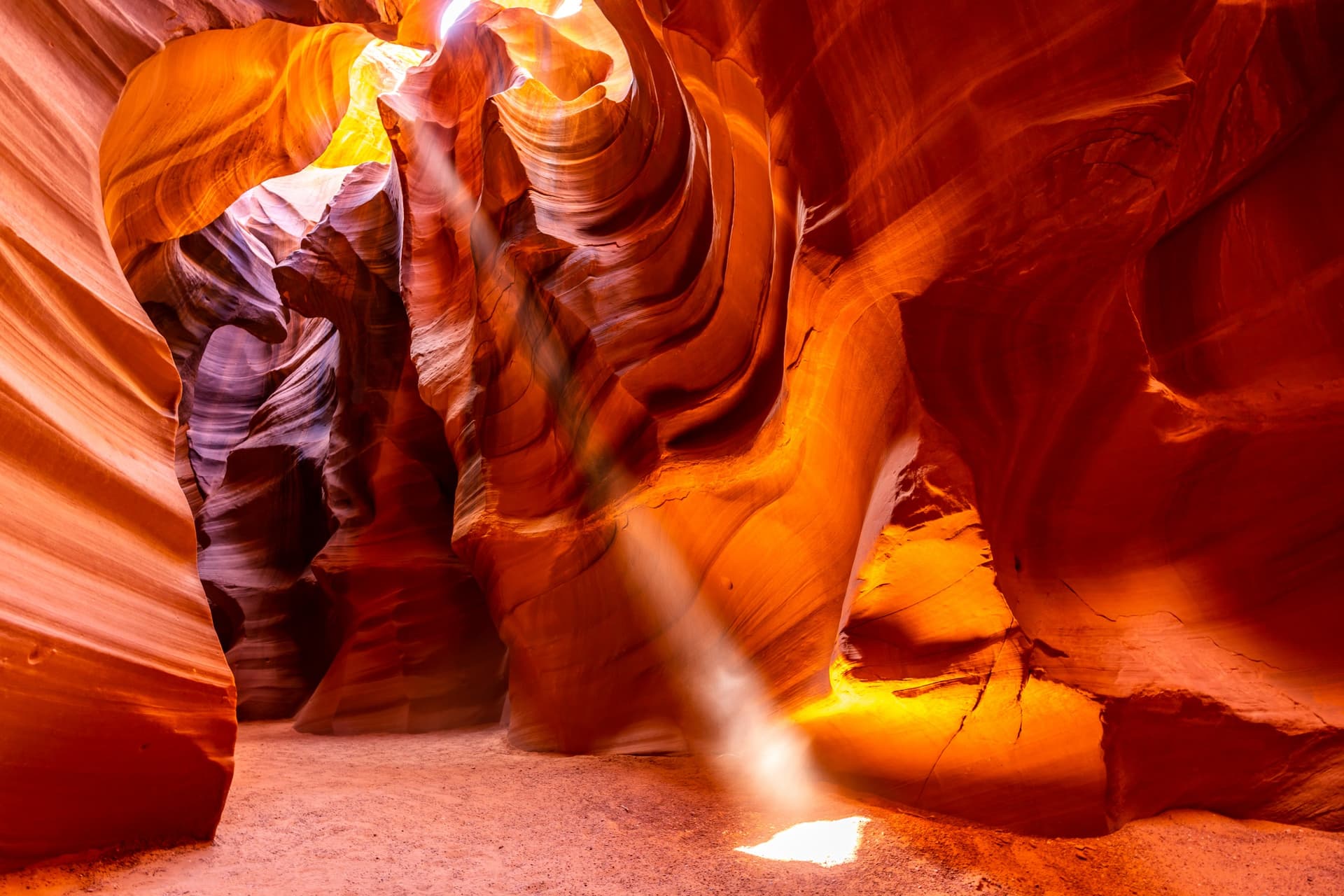
The canyon owes its reputation to its smooth walls, sculpted in twisted curves, and to its light beams that descend vertically between narrow cracks at midday. The color variations—from reddish-orange to violet depending on the sun's angle—result from both water erosion and light reflection on the sandstone.
Unlike the wide-open spaces of the Grand Canyon or Monument Valley, the experience here is confined and vertical: you progress along the bottom of a fissure just a few meters wide, beneath walls dozens of meters high. This distinctive feature makes it one of the most photographed sites in the American Southwest.
History and Geological Formation
The canyon was carved by water erosion: during storms, runoff waters carry sand and rock, deepening the valley year after year and smoothing the walls. This process, slow on a human timescale yet continuous, has created the characteristic undulating columns.
The site was opened to the public in 1997 by the Navajo Nation, which manages it. That same year, in August, a sudden flash flood claimed the lives of eleven visitors (French, Swedish, English, and American) in the Lower section. In 2010, dozens of people found themselves stranded on a cliff during another flood event. These incidents led to the installation of fixed metal stairs in the lower section, a weather warning station, and mandatory guided visits by a guide trained in risk management.
What to See: Upper and Lower Antelope Canyon
Upper Antelope Canyon
The Navajo name translates to "the place where water flows through the rocks." The section measures approximately 200 meters long by 4 meters wide, with a flat, sandy floor requiring no particular physical effort. This is where the famous vertical light shafts form when the sun passes directly above the upper cracks.
Access is by four-wheel-drive vehicle from the meeting point. Visitor numbers are high and midday time slots must be reserved well in advance.
Lower Antelope Canyon
Its name means "arches of twisted stone." The section measures approximately 400 meters long and features a V-shaped form with a significant elevation change. Progress requires descending and then climbing a succession of narrow metal stairs, making it a more physically demanding route than the Upper.
The light here is different: fewer vertical beams, but diffuse reflections highly appreciated by photographers for their color nuances. Visitor numbers are generally more modest, though increasing.
Practical Information
- Guided visits are mandatory through an authorized Navajo operator. No unguided visits are permitted.
- Advance reservation is strongly recommended, especially during high season and for midday time slots.
- Tribal permit required in addition to tour fee, as the site is located within the Lake Powell Navajo Tribal Park.
- Prohibited items in the canyon: backpacks, handbags, fanny packs, tripods, selfie sticks, food and beverages. Only a camera or phone is permitted.
- Duration: allow approximately 1 to 1.5 hours on-site for each section, excluding transfer time.
- Rates: vary depending on the section, operator, and season; "photo" time slots at midday command significantly higher prices.
When to Visit
The most dramatic light displays, particularly the vertical beams in the Upper section, are visible from late spring through early autumn, ideally between 11 a.m. and 1 p.m., when the sun is at its highest. Summer monsoon season (July to early September) offers the most dramatic lighting but also the highest risk of closure due to flash floods. Spring and early autumn provide the most stable compromise. In winter, the canyon remains accessible but the lighting is less spectacular.
How to Get There
The logical starting point is the town of Page, in northern Arizona, where authorized operator offices are located. Since Page is served by only a small regional airport, most visitors arrive by car as part of a Southwest road trip.
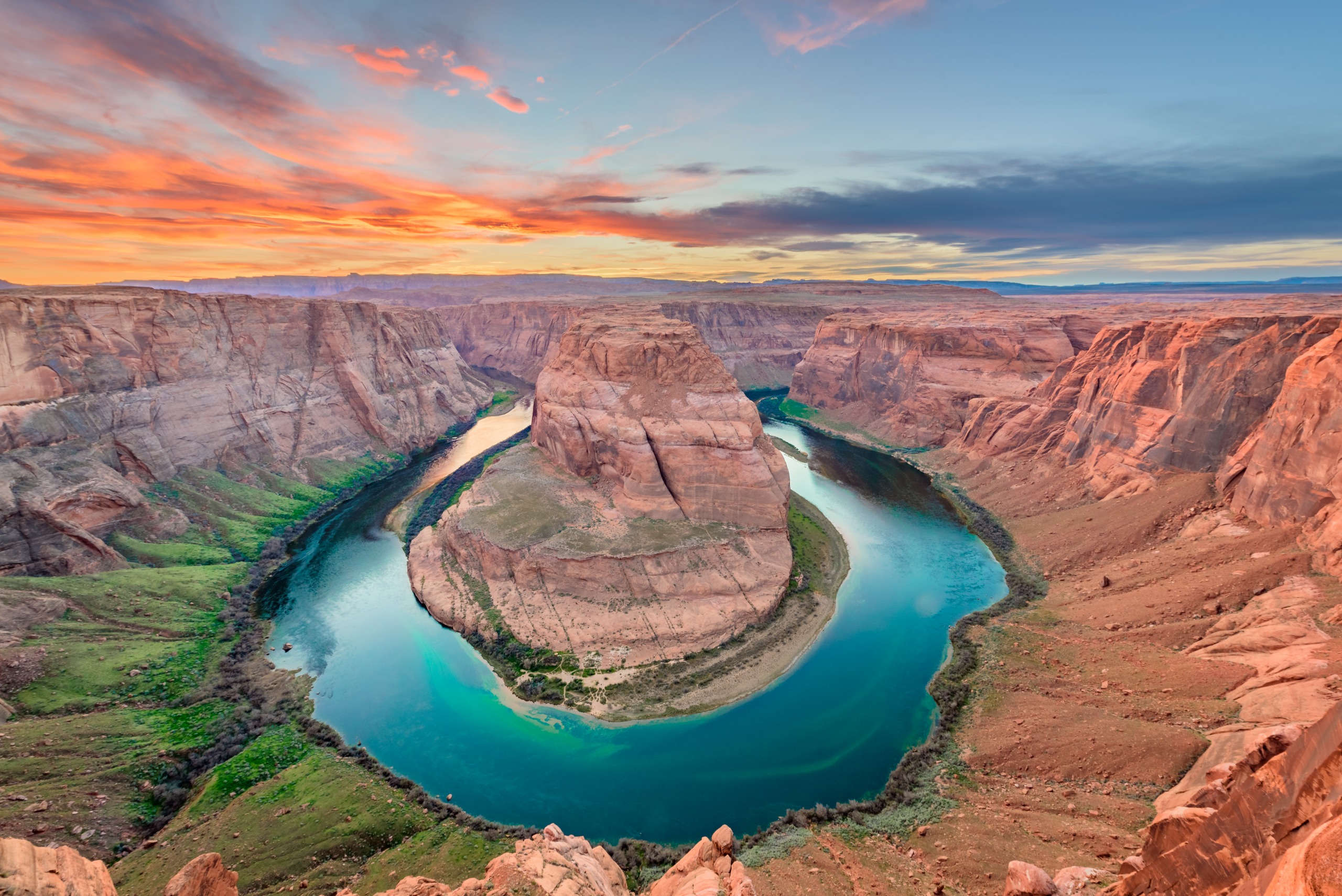
Day-long organized tours also depart from Las Vegas and Phoenix, but the drive exceeds 5 hours each way, making the single-day option exhausting. It is more comfortable to spend a night in Page to combine the visit with Horseshoe Bend and Lake Powell.
What to Combine in the Region
Antelope Canyon fits naturally into an itinerary encompassing the major sites of the Colorado Plateau. Within a day's drive, Bryce Canyon National Park offers a striking contrast with its orange hoodoos. Further northwest, you can reach Zion and the North Rim of the Grand Canyon. As for cities, an American journey can extend to major cultural landmarks such as Broadway in New York or the upscale residential neighborhoods of Beverly Hills.
Frequently Asked Questions
Frequently asked questions
The Upper is flat, accessible to all, and offers the most photogenic vertical light beams at midday. The Lower is narrower, more physically demanding (metal stairs, V-shaped elevation) but often less crowded and appreciated for its color nuances. If you have time, both sections complement each other; otherwise, the Upper remains the default choice for a first visit.
No. The site is located on Navajo Nation territory and visits are only permitted with an authorized guide, regardless of which operator you choose. This rule applies both to site preservation and safety, due to the risk of sudden flash floods.
The light shafts in the Upper section form around solar noon, typically between 11 a.m. and 1 p.m., and only from late spring through early autumn. Corresponding time slots must be reserved weeks or even months in advance.
The Upper, with its flat floor, is the most accessible but requires a four-wheel-drive transfer on a sandy trail. The Lower, with its narrow metal stairs and elevation changes, is not suitable for people with reduced mobility or very young children.
Plan Your Trip
Antelope Canyon combines ideally with other major sites on the Colorado Plateau. To build your custom itinerary, consult our suggestions for trips to the États-Unis.
Interested in this visit?
We can include it in your personalised itinerary.